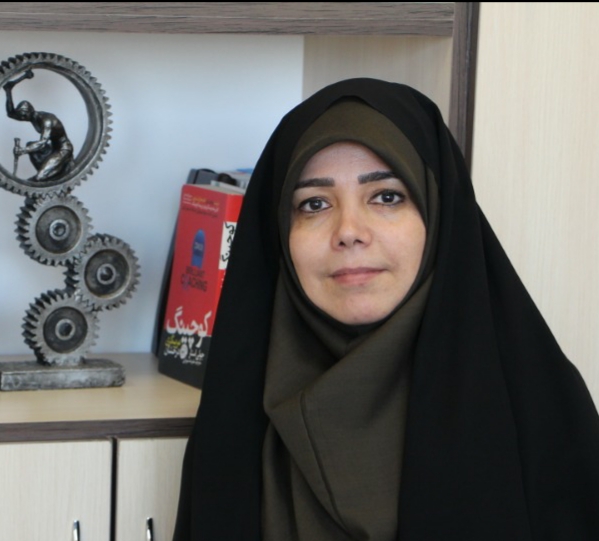

The Education Department is a core unit within the faculty, responsible for planning, organizing, and overseeing educational activities. It works closely with academic staff to design and update course curricula, coordinate class schedules, and enhance the overall quality of teaching. The department aims to provide a supportive environment for effective learning and the academic development of students. It also plays a key role in academic advising, addressing educational concerns, and organizing consultation sessions. By applying modern teaching methods and responding to current educational needs, the Education Department strives to improve the learning process and contribute to student success.

Javad liaghatdar, M., Ja’fari, S.E.M., Abedi, M., Samiee, F.
Publication Date: 2008
Spanish Journal of Psychology (11387416)11(1)pp. 310-313
The aim of the present study was to examine the internal reliability, content validity, construct validity, and concurrent validity of the Persian translation/Farsi version of the Oxford Happiness Inventory. The Oxford Happiness Inventory and Fordyce Happiness Inventory were completed by a sample of 727 Iranian university students. Findings confirmed the internal reliability, construct, and concurrent validity of the Oxford Happiness Inventory. Thus, it can be recommended for use as a trait-measure of happiness among Iranian samples. Copyright 2008 by The Spanish Journal of Psychology.
Iranian Journal of Psychiatry and Behavioral Sciences (17358639)3(2)pp. 4-14
Objective: Many theorists have attempted to illustrate family functions. The aim of this study was to examine the relationship between self-differentiation, mental well-being and welfare and the quality of an individual's married life, specifically in the framework of Bowen's theory. Methods: The sample size for this descriptive research project consisted of 560 participants who were chosen at random from the clients referred to a number of counseling centers in the city of Isfahan, located in central Iran. Assessment tools utilized in this project consisted of Differentiation of Self Inventory-2 (DSI-2), General Health Questionnaire (GHQ), Satisfaction with Life Scale (SWLS) and Positive and Negative Affects Scales (PANAS) as well as Revised Dyadic Adjustment Scale (RDAS). Results: Measurements were carried out to ensure the validity of this research: First, the validity of each subject questionnaire was examined by the Confirmatory Factor Analysis (CFA). Then, the structural model for the conceptualization of the relationship between differentiation of self and other factors along with the quality of an individual's married life was presented and accordingly adjusted by reviewing preceding studies in the framework of Bowen's theory. Conclusion: It was concluded that the questionnaires were indeed valid to be used in both research and clinical settings.
Ghaffari, M., Ahmadi, A., Abedi, M., Fatehizade, M., Baghban, I.
Publication Date: 2011
Iranian Journal Of Psychiatry And Behavioral Sciences (17358639)5(2)pp. 99-105
Objective: Impulsivity appears to play an important role in suicidal behavior. The aim of this cross-sectional study was to compare the impulsivity, substance abuse, and family/friends history of suicide attempt between suicide-ideated and non suicide-ideated university students. Methods: The research population consisted of all the students of the University of Isfahan in the academic year of 2009-2010. Three hundred and forty students (136 boys and 204 girls) were selected randomly through cluster sampling, of whom 53 participants were suicide-ideated and the rest were non suicide-ideated. The instruments used in this study were the 11th version of Barratt Impulsivity Scale, Suicide Ideation Questionnaire, and the demographic questionnaire. Descriptive statistics and multivariate analysis of variance were used to examine hypothesis. Results: There was a significant difference between suicide ideated and non-suicide ideated subjects in impulsivity (F=3.83, p< 0.001). Accordingly, significant differences were observed between two groups in attentional (F=8.12, p<0.005), motor (F=7.67, p< 0.006), and non-planning (F=4.60, p< 0.033) impulsiveness. The results showed a higher incidence of substance abuse, and family/friends suicide attempt among suicide-ideated compared with non suicide-ideated students. Conclusion: A higher level of impulsivity is probably related to various indices of suicidal behavior. Substance abuse is probably associated with suicidal behavior and this association may involve an interaction with impulsivity. This study provides an initial evidence of familial linkages of suicide ideation and suggests that the loss of an important person in life would be an important predictor of suicide ideation in university students.
Isanejad, O., Ahmadi, S.A., Bahrami, F., Baghban-cichani, I., Etemadi toudeshki, O., Farajzadegan, Z.
Publication Date: 2011
Australian Journal of Basic and Applied Sciences (19918178)5(9)pp. 200-206
This study aimed to investigate the effect of relationship enhancement on improving optimism and marital happiness of couples in Isfahan. The design of this study is quasi-experimental with pretest, posttest and control group. The sample was 36 couples were randomly selected and assigned in an experimental group (20couples) and a control group (16 couples). The independent variable was relationship enhancement which was administrated in 8 sessions on the experimental group while there was no treatment for the control group. The instrument for this study was Marital Happiness Scale (MHS) and Revised Life Orientation Test (LOT-R). The data was analyzed by covariance analysis. The results showed that relationship enhancement has effectively led to improving of optimism and marital happiness of couples (p<0.01). The results showed significantly differences between experimental group, and control group considering the amount of marital happiness and optimism, and the efficacy of relationship enhancement has remained after a month follow up. The results showed that relationship enhancement was significantly effective on improving of optimism and marital happiness. These results may be product useful information about effectiveness of relationship enhancement on marital quality for researchers, counselors and psychotherapists.