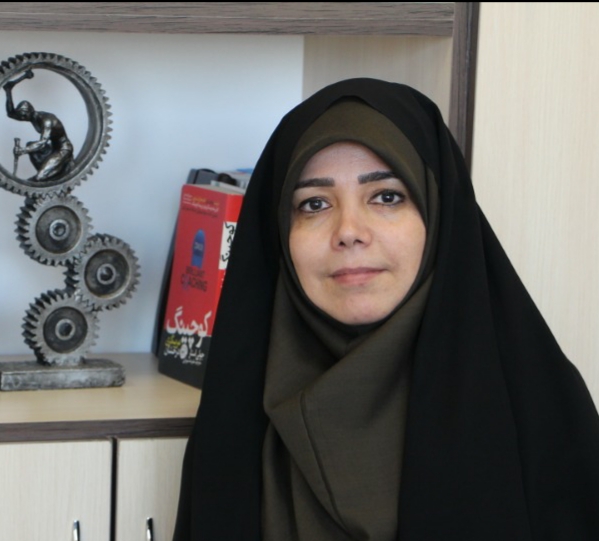
I am associate professor in the faculty of education and psychology and director of the Student Counseling Center at the University of Isfahan. I obtained my Ph.D. in career counseling from University of Isfahan (Iran, 2012). My teaching and research focus on career development, career aspirations, career coaching, vocational rehabilitation and organizational counseling. I teaches courses on career theories, career counseling, and career coaching. I published numerous articles in Iranian and international journals. My research interests Lie primarily in the area of Education and Research in the Fields of Career Aspirations, Career Development, Vocational Rehabilitation, Career Coaching and Organizational Counseling.
Research Interests:
Career aspirations
Career development
Career rehabilitation of people with disabilities
Career coaching
Organizational consulting
1- Member of the International Counseling Association
2- Member of Psychology and Counseling Organization of I.R.Iran
3- Member of the Board of Directors of the Iranian Counseling Association (Winter 2014 to September 2018)
4- Member of the Scientific Association of Career Counseling Students and Graduates
5- Member of the Isfahan Branch of the Counseling Association
Career counseling
Academic counseling
- Bachelor, Bachelor, Isfahan [Isfahan - Iran]
- Master's degree, Master,s Degree, Isfahan [Isfahan - Iran]
- Ph.D., Ph.D., Isfahan [Isfahan - Iran]
Courses:
Personality psychology, Developmental psychology, Research methodology, General psychology, Career guidance, Work psychology, Career counseling, Organizational counseling, Tourism psychology, Counseling techniques, Life skills counseling, Career coaching, Career counseling theories
Articles
Publication Date: 2025
Food and Chemical Toxicology (18736351)200
This research aimed to assess the potential health risks for infants and measure the concentrations of heavy metal substances in the breast milk of mothers residing in Ardabil, Iran. The study was descriptive and cross-sectional in nature. Ten health centers in Ardabil City were selected for the research. The ages of participating mothers ranged from 19 to 39 years, and breast milk samples were collected from those who were 1–12 months postpartum. A 25-item questionnaire was used to evaluate the participants' exposure to heavy metals in their environment and diet. Data analysis was performed using the non-parametric Mann-Whitney U test, resulting in a p-value greater than 0.05. The average body mass index (BMI) of breastfeeding mothers was 26.26 ± 3.73. Spike recovery values ranged from 92 % to 106 %, indicating reliable performance within the ICP-MS range. The limit of detection (LOD) during routine sample analysis was 0.001 μg/L. The daily intake (DI) of lead (Pb), arsenic (As), and chromium (Cr) for infants was calculated. According to the findings, copper (Cu) had the highest average concentration in breast milk at 803.94 μg/L, while cadmium (Cd) had the lowest at 1.87 μg/L. Additionally, potassium (K) exhibited the highest average concentration at 490.49 mg/L, whereas molybdenum (Mo) had the lowest at 0.8 μg/L. The average daily intake of Pb, As, and Cr through breastfeeding was measured at 3.39, 0.799, and 3.47 μg/kg-bw/day, respectively. The results confirmed the presence of mercury (Hg), As, and Pb in every milk sample collected from lactating mothers in Ardabil, indicating potential exposure of infants to elevated levels of toxic heavy metals. © 2025 Elsevier Ltd
Publication Date: 2025
SAGE Open Medical Case Reports (2050313X)13
Low back pain is common during pregnancy, but symptomatic lumbar disc herniation in this period is particularly rare. We report a case of lumbar disc herniation in a 35-year-old woman at 32 weeks of pregnancy, who experienced persistent symptoms despite 6 weeks of rest and medication. Muscle strength in the right L5 nerve root declined to grade 4, and intravenous analgesia was ineffective. After thorough discussions with the patient and her family, a discectomy was performed under spinal anesthesia. Following surgery, the patient’s pain decreased, the Lasegue test became negative, and muscular strength returned to normal 2 weeks post-operation. At 39 weeks of gestation, a cesarean section was performed due to functional dystocia. © The Author(s) 2025. This article is distributed under the terms of the Creative Commons Attribution-NonCommercial 4.0 License (https://creativecommons.org/licenses/by-nc/4.0/) which permits non-commercial use, reproduction and distribution of the work without further permission provided the original work is attributed as specified on the SAGE and Open Access pages (https://us.sagepub.com/en-us/nam/open-access-at-sage).
Publication Date: 2023
International Journal of Environmental Analytical Chemistry (10290397)103(3)pp. 575-590
A complex mixture of organic pollutants (EOPs) enters the environment, which has potential impacts on aquatic life and human health.This cross-sectional study investigated dermal and inhalation exposure to the pesticides imidacloprid and dichlorvos and evaluated the health risk in cucumber greenhouses applicators in the Amzajerdagriculturalarea, Hamadan Province, western Iran. A patch method and a personal air sampler with XAD-2 absorbent were used to measure potential exposure. In mixing and loading, dermal exposure on the hands was 1.15 mg for imidacloprid and 2.27 mg for dichlorvos. During the application of imidacloprid and dichlorvos, total dermal exposure was 8.49 and 16.21 mg, respectively. The calculated absorbable quantities of exposure (AQE) during mixing/loading were 0.0017 mg/day for imidacloprid and 0.0054 mg/day for dichlorvos, whereas AQE during application were 0.159 and 0.437 mg/day, respectively. The arms were the most contaminated anatomical regions of the applicators. The potential inhalation exposure contributed to <7% of the total exposure for both pesticides. For risk assessment, the margin of safety (MOS) was calculated. The MOS for imidacloprid was higher than 1, indicating that the possible risk associated with imidacloprid was low, whereas the MOS for dichlorvos was <1, which indicates a potential risk to the human body that merits concern from policy makers in pest management. © 2021 Informa UK Limited, trading as Taylor & Francis Group.
Publication Date: 2023
Environmental Health Engineering And Management Journal (24233765)10(4)pp. 469-481
Background: The exposure to toxic metals is a major global health concern due to their stability, bioaccumulation, and high toxicity. These metals can be transmitted to the fetus through the placenta and exposure can last throughout life. This systematic review focused on the potential risks of arsenic (As) in breast milk to newborns and infants. Methods: Multiple keywords, such as “human milk” and “breast milk”, associated with “toxic metal”, “heavy metal” or “arsenic” were used to search related databases. Of the 151 articles found, 45 studies were eligible for qualitative review, and 34 were included in the meta-analysis. Results: The lowest and highest levels of arsenic were found to be 0.04 ± 0.70 and 27.75 ± 28.30 μg/L, respectively. The overall pooled average concentration (95% CI) of arsenic in breast milk was 0.11 (95% CI: 0.11, 0.12). The results indicated that infants who consume breast milk are within a safe limit for cancer risk. Conclusion: The exposure to significant metals is associated with disease development. Therefore, ongoing knowledge creation through mental acts and continuous observation is necessary to better understand the effects of heavy metals in future studies. © 2023 The Author(s).
Publication Date: 2022
Environmental Science and Pollution Research (09441344)29(25)pp. 38450-38463
The cultivation of greenhouse crops is the most severe form of crop production in Iran, and vast quantities of unreasonable pesticides are being utilized to control the pests. The residual level of blood pesticides and their correlation with multibiomarkers were determined to evaluate the adverse health consequences on greenhouse workers in the Hamadan, west of Iran. Participants were 180 adult males, including 90 greenhouse workers exposed to pesticides and 90 control individuals. Blood samples were taken from all subjects for pesticide residues analysis, and hematological and biochemical parameters. The blood pesticide residues were analyzed using gas chromatography (GC) with a flame ionization detector. Hematological and biochemical parameters were determined using hematology cell counter and auto analyze, respectively. Statistical analyses were done with STATA version 14.2 software. The multivariate regression was used for relationship between various pesticide concentrations in blood and changes in biomarkers in pesticide exposed group. The analyses revealed that 64 out of the 90 workers had residues of dichlorvos, diazinon, and chlorpyrifos in their blood serum, and 56.25% out of these workers were exposed for >15-year period. The residues of all three pesticides were higher than the no observable adverse effect level (NOAEL) in all the exposure duration categories. Comparisons of hematological parameters showed that mean monocyte (0.76±0.41, P < 0.001), lymphocyte (3.52±1.20, P < 0.001) and platelet counts (278.18±66.05, P=0.001), mean platelet volume (10.18±0.59, P=0.002), and plateletcrit (PCT) (0.275±0.05, P<0.001) were significantly higher in workers than the controls, whereas hemoglobin (HB) (14.61±1.28, P=0.028), mean corpuscular hemoglobin (MCH), and mean corpuscular hemoglobin concentrations (MCHC) (32.44±0.90, P<0.001) were lower in workers than controls. These results indicate that the exposed individuals have experienced significant hemotoxic effects during the pesticide exposure. The study also predicts the risk to exposed individuals in developing countries like Iran and demands realization of safety measures to prevent such dangerous effects of pesticide exposures. © 2021, The Author(s), under exclusive licence to Springer-Verlag GmbH Germany, part of Springer Nature.